By Anne P. Beatty | Anne P. Beatty writes and teaches in Greensboro, North Carolina. More of her work can be found @ www.annepbeatty.com
By Anne P. Beatty | Anne P. Beatty writes and teaches in Greensboro, North Carolina. More of her work can be found @ www.annepbeatty.com
READMORE
The street divides us, one group of protesters on one sidewalk, one on the other. Two sets of signs: Masks are child abuse, Masks keep our children safe. No CRT in our schools, Teach our children the truth! You work for us, We support our teachers. A man with a clipboard guards the plate-glass double doors of the building. He knows our numbers and tells us when we’re allowed inside to speak.
I’m looking at all these signs as I think about what I’ll say, ideas I’ve typed up and folded inside my back pocket. Down the street, I can see the corner of Eugene and Florence where, as an elementary school student, I waited for my bus.
Here in Greensboro, North Carolina, where I grew up, people have been gathering monthly for protests outside school board meetings. Here, as elsewhere, people disagree about banning books, teaching critical race theory, and arming teachers. This is a city where first a high school, then the district, upheld a teacher’s decision to assign Jesmyn Ward’s novel Salvage the Bones after parents challenged it, but this is also a city where, a few months later, a former Marine intentionally drove his car into a woman escorting patients inside our county’s sole abortion clinic. This is a Southern city, where some things bloom, and others are buried.
Because I want my three kids to know sooner than I did what happens and has happened in our town, I usually make them come to the protests organized by a local anti-racism alliance to which I belong. Sometimes I bribe them: Dum-Dums in their coat pockets, Razzmatazz smoothies from the Juice Shop. Sometimes they surprise me and join in all the chants, especially my eighth grader, the oldest, who yells, Power to the people! and What do we want? The truth. When do we want it? Now! But they aren’t here with me tonight.
Across the street, the other group of protesters have a trifold pasted with the faces of smiling children killed at Sandy Hook, because they believe that if there were more police officers in the school that day, or teachers with guns, those children would still be alive. They are a local chapter of a national movement called Take Back Our Schools, a name that suggests a possessive nostalgia for a mythical past, a territory to defend against invaders. Once I looked up the website for their local school board candidate and found her blog post titled, “Seriously, Who Are These People and How Did They Get in Our Schools?” I’m a high school English teacher, so it was hard not to take this personally.
To speak to the school board, you must email your name and address to the clerk before the meeting, and she will reply to confirm your place in the speaking order. I am number 28.
One year, after reading George Orwell’s essay “Politics and the English Language,” in which he skewers the intentional obfuscation of political rhetoric, my class discussed the title of a bill proposed by our state legislature that spring. The bill, called the Youth Health Protection Act, targeted trans kids and would require that teachers disclose anything students say about their gender identity to the student’s parents. One of my students snorted, “They should call it the ‘Teachers Are Narcs’ Law.” The bill didn’t pass, but this year a similar bill is before the legislature, and it also includes provisions about what teachers can teach with regard to LGBTQ issues. Its goal is curriculum suppression, a member of the anti-racism alliance pointed out.
Figuring out what to teach and how is getting harder in North Carolina for many reasons. In 2021, our Republican lieutenant governor created a reporting portal called F.A.C.T.S. (Fairness and Accountability in the Classroom for Teachers and Students — a name Orwell would love.) The website offers a space for parents to report, among other things, “examples of students being subjected to indoctrination according to a political agenda or ideology” and “examples of students being exposed to inappropriate content or subject matter in the classroom.”
When two white mothers mounted a campaign against Ward’s 2011 National Book Award-winning novel, Salvage the Bones, they claimed that it was “trash” and “pornography.” Esch, the narrator, is a pregnant teenager, and there are scenes of coercive sex in the book, which mostly focuses on the love and resilience of Esch’s working-class Black family on the Mississippi Gulf Coast as she and her brothers prepare for Hurricane Katrina. The white mothers questioned whether this family was worthy of reading about, coded language that seemed designed to trigger racial implications without saying the word “race.” My students are good at sniffing out implicit messages. It’s my job to help them get even better.
The Take Back Our Schools folks seized upon this book-banning hearing. Their school board candidate urged supporters to attend and pack the audience. On her blog she wrote wryly, “Apparently, the young 15-year-old finds her strength and her voice through the unfolding tragedies and her sexual trysts.” I want my students to be able to read that sentence and see the lip curl around the word “apparently.”
At the hearing in the (mostly white) school’s media center, the AP English teacher defended her choice to teach this work of literary merit, claiming, “Silencing this book would be silencing the voice of a young, teenage girl who learned to stick up for herself.” She cautioned, “We cannot pick and choose the parts of our histories and cultures within our comfort zones. Imagine how empty these shelves would be.” I wasn’t there to hear her — I was teaching my own students that morning — but I read her quote and pictured her gesturing to the library walls. It was easy to picture, because five years ago, I taught at that school. I had been the senior AP teacher.
Her students showed up to support her. Some held signs like Banning Books = Hiding the Truth. One Black female student explained to reporters, “Silencing the voice of young African American women won’t silence the experiences they go through.” I admire these students for their political awareness and sense of their own voices as necessary to the conversation. They remind me of my own students a few miles away.
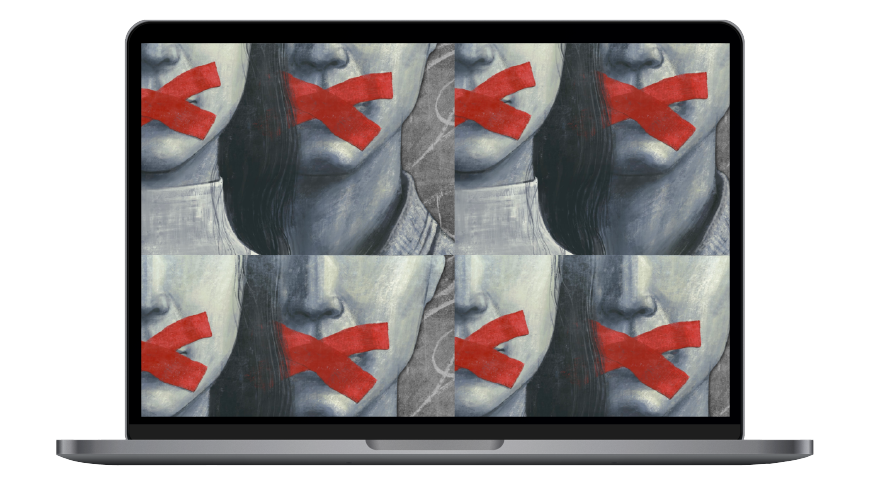
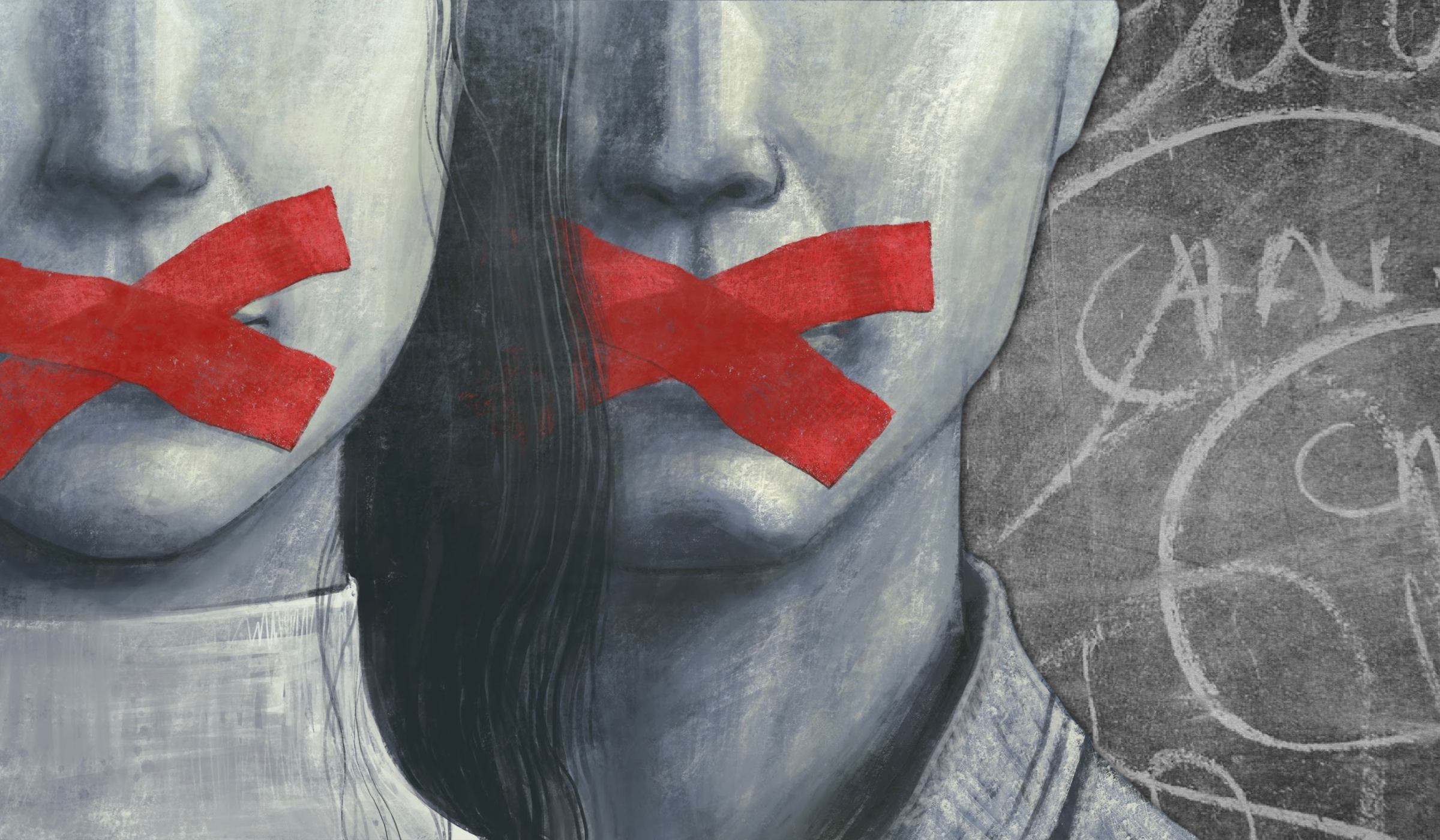
What is taught has always been policed. Though it’s also true the level of scrutiny depends on your state, your school, and your courses — in other words, it depends on which side of the street you stand on. In my experience, people rarely question what’s being taught in the low-performing school, or in the standard classes at the high-performing school. And sometimes teachers police themselves. When I was hired at that previous school, in that white, mostly affluent community, other teachers described the uproar a few years prior when parents had challenged Mark Mathabane’s Kaffir Boy: The True Story of a Black Youth’s Coming of Age in Apartheid South Africa, allegedly over a passage describing sexual assault. Teachers remembered news vans stationed outside the school, meetings with district officials and administrators, harassment from parents. “Don’t teach it,” they warned, even though the book’s standing in the curriculum had been upheld. Hundreds of copies lined the shelves of the bookroom, hidden, mute. Nothing is more silent than an unread book.
As with my children, I want my students to know what happened here, in our city, our country, our world. I have taught Invisible Man and Their Eyes Were Watching God and The Absolutely True Diary of a Part-Time Indian and Fences, all of which have been challenged or banned somewhere. Still, some things I have never taught, even though I have lamented their conspicuous absence in my own education, like the Greensboro Massacre of 1979. I’m an English teacher, not a history teacher, I rationalized. It was easy to stay silent, to think that’s not my job.
The massacre began on November 3 as another protest, with people chanting and singing in the streets two miles from where I grew up. Video footage shows posters aloft, children chanting. The political rally had been planned by a multiracial coalition, many of whom were organizing textile workers here, and most of whom were Communist Workers Party members. It was billed as a “Death to the Klan” march — and the Ku Klux Klan and American Nazis showed up. In photographs you can see the Klan members unloading shotguns and rifles from the trunk of a finned Ford Fairlane. The word that comes to mind is brazen: efficient but unhurried. In minutes the Klan members and Nazis had killed four people and wounded 11 others. A fifth victim died the next day.
The Klan members arrived in a slow-cruising caravan as the march was about to start. The caravan included an informant who had told the police department of the plans, yet no police were present when the shooting began. Although a few protesters had guns and fired back, no Klan members were killed. Police arrived shortly after, arresting 12 Klansmen and Nazis in a van, but not apprehending any of the other vehicles. Instead, they arrested protesters.
In the two criminal trials, all Klan members were acquitted by all-white juries. In the one civil trial, the defendants — the Klan members along with the Greensboro Police Department — were found guilty of a wrongful death charge, but only in the case of the one victim who was not a member of the Communist Workers Party. In 2004, before I’d moved back home, the city began holding Truth and Reconciliation hearings modeled on those of South Africa. Survivors, victims’ widows, community members, and police officers spoke about their understanding of what had happened that day to try to move forward with an increased awareness of why the tragedy had unfolded. Desmond Tutu, the Archbishop of Cape Town, came. These hearings were the first of their kind to be held in this country. People had a sense that we were facing our history in a new way.
It might be easier to recall that sense of reckoning — optimism, even — during the hearings if the public schools had followed the commission’s eventual recommendation, in 2006, to develop curriculum to teach local students about the massacre. Now, 17 years later, teaching and raising my kids here, I know that students still only learn about the massacre in pockets, from individuals who feel compelled to teach it. Most students still graduate from this district of 70,000 kids knowing nothing about what happened here that day — just as I did.
In eighth-grade social studies — state and local history — I was handed a blank map and told to identify all hundred counties in the state. We practiced so much before the test that I can still see the photocopied map of elongated North Carolina, the outlines growing fuzzier with each duplicate away from the original. I’m sure I aced the test, though I’d be hard-pressed now to name more than 20 counties. I never learned about the massacre, or the bloody white supremacist coup in Wilmington in 1898.
Such omissions from the history curriculum inspire our protest signs. Our group came up with slogans like Teach our children the truth and Racism divides and True history unites. Scrutinizing these placards in our front yard, though, my husband Adam points out that this language is so ambiguous, so dependent upon one’s assumptions about what “truth” or “teach” means, that either side could claim them. Orwell would agree.
Adam’s observation is corroborated the following month when a friend tells me he wasn’t sure, driving up to the protest, whether to stand with us or against us based on our signs. It was only when he saw we were masked and multiracial that he knew he wanted to be on our side of the street.
Outside the December school board meeting, a rangy white man from the other side crosses the street, past our row of protesters, to the door of the school building. In jeans and boots, with the look of a past-his-prime country singer, he demands that the man with the clipboard let him inside. The man calmly says, “Your name isn’t on the list.”
“All I know,” yells Angry Man, “is that Tom told me to come down tonight and speak, and I’m here!”
“Sir, you have to sign up to speak, and your name isn’t on the list.”
Angry Man moves in, menacing, and two police officers in the lobby step through the doors to intervene. He screams at them; they are calm but insistent; he eventually goes back across the street, still screaming, to stand beside the sign advocating for a stronger police presence in schools.
I can’t think of any other time I’ve been so close to such a volatile adult in public. It’s his anger, even more than the cold, that I’m glad has been omitted from my kids’ experience of the protests. Yet I know it is this protective urge that shields our children from the blunt facts of the world.
A woman across the street is shouting into her bullhorn, ostensibly to school board members, “You work for us!” A half-hour later, I see her huddled with another woman around Angry Man’s cell phone, on which he appears to be, if I’m eavesdropping correctly, displaying images of a man’s face he had punched in a bar in some chivalrous act on behalf of a girl. I’m not sure what this bragging — “see those bruises?” — has to do with the Board of Education or the history curriculum or our children or why we’re all standing out in the cold, watching our breath bloom outside our lungs. But I understand that even on these sidewalks we are pushing up against the serrated edge of violence.
Good teachers teach students how to find the pattern, and how to find the deviance: how to see that different things are actually the same thing, or, sometimes, that what look like the same things are in fact different. I want my students to know what I hope other people are also teaching my children: that the world is manifold, and that their place in this world is fraught and implicated and full of potential power.
Although the scope and impact of the Greensboro Massacre pales compared to that of the Vietnam War, the two are now forever linked in my mind, in part for reasons that Griffin, the KKK’s Grand Wizard, also saw: What happened here in 1979 was directly connected to the larger political tensions of the time.
There’s this that he said, in one of his several tirades about communism during the hearings: “And I think every time a Senator or a Congressman walks by the Vietnam Wall, they oughta hang their damn heads in shame for allowing the Communist Party to be in this country. Our boys went over there fightin’ Communism, came back here and got off the planes, and them that they call the CWP was out there spittin’ on ’em, callin’ ’em babykillers, cursin’ ’em. If the city and Congress’d been worth a damn, they would told them soldiers turn your guns on them, we whooped Communists over there, we’ll whoop it in the United States and clean it up here.”
Or there’s the fact that on the funeral march route seven days after the massacre, an enormous sign posted to the back of a parked pickup truck read: Greensboro People Don’t Want You Communist Bastards In Our Town.
But mostly I suspect these events are linked for me because I learned about the Greensboro Massacre in Vietnam, where I also learned, finally, about the Vietnam — the American — War, and both revelations kindled the same feeling of betrayal over not knowing what I should’ve known about the place I call home.
Number 26 is called. Then number 27. I’m nervous. I’ve never done anything like this before. I am informed I have three minutes to speak. I begin, “I come to you tonight with this message: Our students are stronger and more resilient than we might think. We must teach our children the whole truth about our country’s history of racial injustice. They are strong enough to handle this truth. In fact, they’re hungry for it. And when students realize they have not learned the full truth, they feel betrayed.”
I explain my own sense of betrayal when I learned about historical events only as an adult, and I ask the school board members to trust teachers to facilitate these conversations, to teach students how to think, not what to think. When I walk outside, Angry Man is gone. The woman with the bullhorn is gone. Most protesters on both sides are gone. Leaving, I drive past that corner where I used to wait for the school bus on distant mornings, neighborhood kids jeering, a stick skittering across the road into the gutter.
Later that night, I will replay in my head Angry Man’s demands to be allowed inside, his boasts about the bruises he inflicted. The more I scroll through the law-and-order comments that Take Back Our Schools sympathizers post under viral Facebook videos of high school fights, and the more I recall the screech of the bullhorn — the woman’s long pink nails clacking against its plastic handle with a magnified roughness — the more I see how that man’s violence and aggression fits a pattern. He was angry way before he got here. This night is just another beat in this country’s long exhalation of anger and fear.
At the end of her speech, Lorde says, “We can learn to work and speak when we are afraid in the same way we have learned to work and speak when we are tired. For we have been socialized to respect fear more than our own needs for language and definition, and while we wait in silence for that final luxury of fearlessness, the weight of that silence will choke us. … And there are so many silences to be broken.”
Eventually, I’ll go back to speak to the school board again. I’ll be less nervous. The Take Back Our Schools candidate will lose her race, and then the county’s local chapter will disband. This will feel like a victory. But months later, state legislators will propose a bill called Equality in Education to regulate what teachers can and cannot say about race and the American government. The threat of silence remains.
Meanwhile, every weekday morning, the buses will come, and students all over this city will herd onto them and unload into classrooms, where some days they will be handed a blank map and some days they will be mute as bottles. But other days they will learn how to become the wind whistling over the lips of bottles. A teacher demonstrates how a wet mouth over a glass O can make it sing, and then listens as her students carry the sound.
Follow us